
How to Curl Hair for Soft Movement : Guide
Learn how to curl hair for soft movement using gentle techniques, controlled heat, curl direction, and finishing habits that keep hair flowing naturally.
Hair should look natural, touchable, and easy to move—not stiff or over-styled—and that softness comes from gentle, flowing curls. I’ve noticed that while most people want movement, they often end up with curls that are too tight or overly structured from using a curling iron with excessive heat, timing, or poor technique. At first glance, the hair may look fine, but once you move, it doesn’t flow. Instead of bending naturally, it holds a fixed shape. True delicate motion isn’t forced—it’s intentionally created.
To learn how to move hair in soft movements is not to concentrate so much on the strength of curls but on flexibility. The goal of the professional stylists is to create curls which are reactive to movement, light and touch. They do not follow monotony and rigidity. Free flowing hair is more modern and healthier. This article provides the way of forming curls that are light, smooth, and natural on top to bottom. It aims at the movement that will be long-lasting yet not sacrificing softness.
What Soft Movement Really Means in Hair
Soft movement Soft movement is hair that is bent and flowing, but not in a fixed curl pattern. They contain curls, but not obtrusive and restrictive. When you walk, or rotate your head, naturally the hair moves. This gives it a casual, lived in appearance. The light movement is delicate in nature.
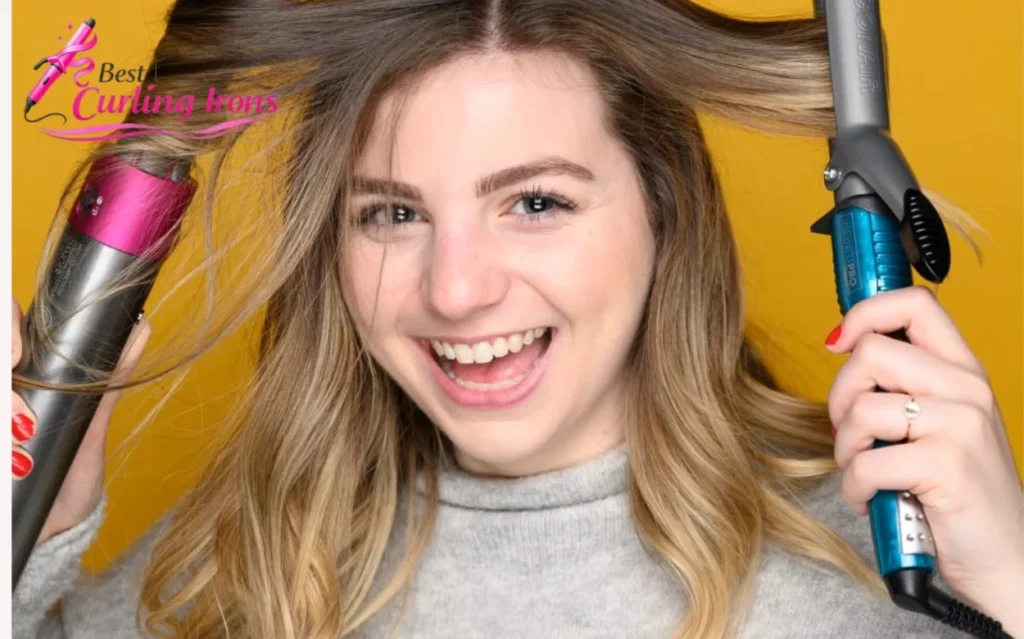
I have observed that soft movements tend to improve with time. When curls are in a state of relaxation they become blended together. Professionals know that movement is in regard to flexibility. Hair must be natural rather than sticky. This concept would prevent over-styling. Light motion begins with the correct mentality.
Starting With Hair That Supports Movement
The condition of the hair contributes greatly to the appearance of movement. Excessively dry hair appears stiff whereas excessively soft hair collapses. The hair must be well-balanced and healthy and then it can be curled. Fully dry hair that is clean is the one that responds to a gentle way of styling. Texture matters.
In my case, it is easier to move softly when hair is not overloaded with the product. The professionals do not use heavy creams on movement-oriented fashions. They want hair to feel light. Curls are able to fall naturally when the hair is balanced. The way a preparation is done determines the tone of the end outcome.
Choosing a Barrel Size for Natural Flow
The size of barrels will determine the loose or defined curls. With extremely small barrels, the curls form very tight limits to movement. Very massive barrels can form bends that have minimal structure. Soft movement is typically difficult to work with larger barrels, though medium to slightly larger barrels are generally effective.
I have observed that professionals select the size of barrels using hair length and density. It is not a tight purpose but a shape. Curls are able to soften in the right barrel. Movement is supported by the choice of the tool that is carefully selected. Flexibility is achieved in a balanced barrel instead of rigidity.
Sectioning for Fluid Results
Sectioning influences the appearance of the blending of curls. It is beautiful when there are perfectly even formations that make a structured appearance. The minor contrasting parts create smoother motion. In professionals section, deliberate, not meticulous. Variation creates softness.
Relaxed sectioning is useful, and through experience, it allows curls to fall naturally. Hair does not clump or otherwise split too sharply. This enhances flow. Parting is not supposed to be hard but should not be hard at all. Any motion is an advantage to slight irregularity. Form is there, but it is not conspicuous.
Curl Direction and Natural Motion
Direction of curls has a very strong influence on the movement of hair. To roll everything towards one direction brings uniformity. The monotony diminishes softness. There is a tendency of professionals switching direction to facilitate flow. This does not allow curls to stick together.
I have also observed that offline curls loosen the style and make it move. Direction alternation is dimensional. Hair is natural in its separating motion. The choices of directions must be more subtle rather than dramatic. Purposeful variation results in moving fluidly.
Heat Control for Flexible Curls
Inevitable extreme heat may fix curls in shape. The movement of soft needs flexibility. Hair is kept in moderate heat by professionals so that it retains its natural response. Form should not be frozen but be molded by heat. Heat is regulated to ensure the softness.
Personally, I have found that the reduced intensity of heat combined with timely movements yields more movement. Hair remains touchable. Elasticity is eliminated by overheating. Movement is dependent on softness as well as shape of the curl. Natural flow requires control of heat.
Timing and Gentle Release
Leaving hair with the curling iron too long will make tight curls. Tight curls resist movement. To have a soft movement, professionals loosen hair after shape develops. Timing is less responsive and less heavy. The hair must not feel hot but warm.
I have observed that the curls formed by soft timing are very relaxing. The hair does not spring but folds. Professionals do not look at the clock but the hair. Liberal parole aids tenderness. The time determines the sensation of fluid curls.
Letting Curls Cool Naturally
Curls are left to cool down until they reach their final shape. The premature touching of hair interferes with movement. Smooth curls are not rubbed off by professionals. Shaping becomes fixed with the process of cooling. It finishes off the process of curling.
I have found that curls which cool naturally move later. This is because they do not require a hefty finishing. Cooling aids in the avoidance of the desire to rework curls. Here patience is a better softener. To maintain movement, cooling is necessary.
Breaking Up Curls for Flow
Soft motion normally involves parting curls a little. Fingers are used by the professionals rather than a brush. Fingers part curls without loss of shape. This step is a mixture of curls.

I have observed that rough brushing causes no movement. Light separation maintains structure and also provides flow. Selective lifting and loosening occurs in the hands of professionals. Intercession of curls should be light. This action makes the curls move about as waves.
Finishing Without Stiffness
Soft movement may be improved or spoilt, depending on the finishing products used. Sprays and creams do harden hair. Minimal finishing or none at all is practiced by professionals. Hair should feel light.
Experience demonstrates that it is not possible to use too much if one stands aside before completing the work. Lots of styles do not require having any product. When it is being used, it is applied to ends lightly. Roots are left untouched. Light movement is based on restraint.
Common Mistakes That Kill Movement
The desire to get the best curls is one of the prevalent errors. Virtue brings rigidity. The other mistake is excessive use of heat or product. These norms make one less flexible. When hair is overworked the movement is lost.
I have noticed that people usually attempt to correct movement by brushing more. This usually flattens hair. The professionals do not pursue control. These errors are avoided by awareness. Light motion is associated with allowing hair to act naturally.
Practicing for Consistent Soft Results
The gentle motion is progressed by practice and observation. The professionals come to know the reaction of their hair to timing and heat. Intuition is developed after each session. The slightest changes produce huge transformations. Practice refines technique.
As my experience shows, it is possible to concentrate on flexibility rather than hold changes everything. Hair becomes easier to style. Movement looks intentional. With time, it leads to similar outcomes. Indeed, through practice, softness becomes habitual.
FAQs
Conclusion
It is a matter of flexibility, balance and restraint when it comes to curling hair so as to give it motility. Flow is formed by moderate heat, slow timing, and deliberate variation. Softness is maintained by cooling and light finishing. Movement is due to letting hair fall naturally. Before long comes the use of technique rather than force.
To my knowledge, the prettiest curls are not clinging to form, but are floating freely. Hair appears natural and stylish with the appropriate treatment. Light movement can be done through conscious practices. Confidence and consistency is a result of practice. Natural flow is rather an understanding than a control.