Does daily curling cause hair thinning – Beginner Guide
Does daily curling cause hair thinning? Learn how frequent heat styling affects hair, the difference between thinning and breakage, and how to protect hair health.
I often wondered whether using a curling iron daily was making my hair weaker at the ends or causing it to thin over time. Curling can make hair look fuller in the short run, but there are real concerns about the long-term effects of regular heat exposure. It’s not just about how curling changes the appearance of hair today—it’s about how it affects hair growth, strength, and behavior over months or even years.
The factors that affect hair thinning are numerous, and heat styling is not a part of a very big picture. This paper clarifies what curling really does to hair on a daily basis, differences between thinning and breakage, and what is most important in case you are a frequent curler.
Understanding What Hair Thinning Really Means
This is because Does daily curling cause hair thinning with hair breakage, yet the two are not synonymous. Thinning typically means that there is a loss of hair density which occurs at the level of the scalp whereas breakage occurs along the hair shaft. In my case, there are a lot of individuals who believe they are thinning yet they are facing the problem of breakage.
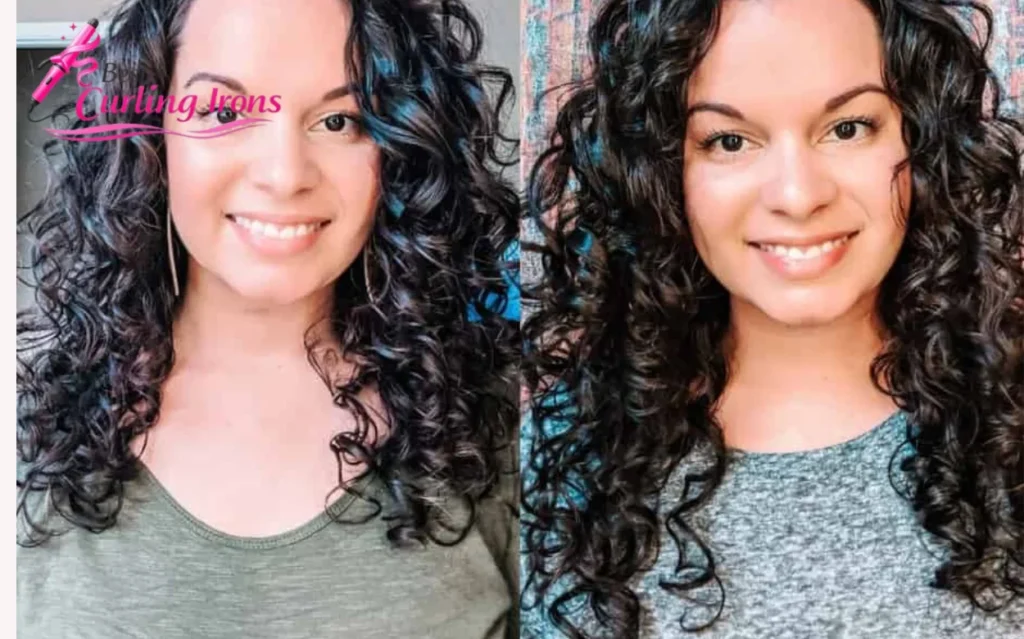
Repeatedly breaking hair may give the impression of being thinner despite the fact that the number of hair that is on the head may have remained the same. This difference is significant, as hair shaft is affected more than hair follicle by daily curling.
How Daily Curling Affects the Hair Shaft
Repeated exposure of Does daily curling cause hair thinning weaken the outer cuticle in the long run in curling. Hair becomes weak and inelastic when it is damaged and thus, breaks easily when the cuticle is damaged. This does not prevent the growth of new hair, but makes the life of the existing ones shorter.
With time, repeated breakages result in a lack of uniformity of length and completeness in particular at an ending. This is usually confused with thinning, although the scalp still may be producing hair as usual.
Can Heat Styling Affect Hair Growth?
Curling equipment does not cause damage to hair follicles unless heat is applied very closely to the scalp or over an unsafe range of temperatures. When used normally, the curling irons do not have an impact on the root of the hair that is under the skin.
Nevertheless, other habits during the everyday curling, like tight tension, pulling repeatedly, or not paying enough attention to scalp condition, may indirectly influence the environment of scalp. It is not only the avoidance of heat that will bring about healthy growth.
Breakage vs True Thinning: Why the Difference Matters
True thinning is alterations in the hair growth cycles and this is usually a result of genetic variations, hormones, medical conditions or age. There is no effect of daily curling on hair growth.
Breakage on the contrary, causes the hair to be thin as some of the hair breaks before it could become complete. In my case, individuals who curl on a daily basis have a higher likelihood of having breakage than thinning.
The Role of Heat Level and Frequency
The same is not true of all the daily curling practices. Repetitive high heat leads to high risk of cuticle damage whereas controlled moderate heat brings about much less stress. Hair does not react to hot spikes of temperatures.
Frequency also matters. Stress on the hair shaft is cumulative with increased days of curling without taking a break. In the long run, this causes hair to be weak and snappy.
Why Some Hair Types Are More Vulnerable
The diameter of fine hair is smaller in size and the number of protective layers is fewer and hence the hair becomes more prone to heat damage. Thin hair breaks easily and therefore fullness fades away fast and this gives it the look of thinning.
Heavy or coarse hair is more resistant to heat, although it may also become dry and split at the ends, even when this is done on a daily basis. Color treated, chemically treated hair is also more susceptible to frequent heat breakage.
Signs Daily Curling Is Damaging Your Hair
Among the initial indicators is the augmented fracture about the ends or crown. When brushed or styled, the hair may either be rough or may lack elasticity or even break easily.
The second indication is less curl hold without an additional product or heat. Broken hair has difficulties in keeping its shape and thus people tend to add more heat and repeat the cycle.
How to Curl Frequently Without Causing Thinning
Thinning is not always the result of curling when done sparingly. Employing the appropriate amount of heat, not using repetitive passes and letting hair cool naturalistically minimizes the stress on the hair shaft.
It is also useful to have intervals of intensive styling days and different hair styles. Occasional periods when the hair is not subjected to heat helps it to rest and gain strength.
How to Curl Frequently Without Causing Thinning
Hair care routines are not less important with the daily hair care. Frequent conditioning, light detangling, and hair trimming the broken ends assist in preventing the breakage to travel up the hair shaft.

Scalp care also matters. Properly grown follicles promote regular growth thus replacing broken strands with time. When there is a balance in the hair care, then, styling on its own does not tend to result in thinning.
My Experience on frequent curling.
I could see that when I curled my hair each day without the need to change the amount of heat or preparation on my hair, I experienced more of the same. At first the appearance was of thinning but on lessening of heat and attending to care, fullness was restored gradually.
This made me understand that not all curling each day will result in thinning, but habits that are taken carelessly may make the hair appear thinner than it may be. Minor modifications were felt.
Common Myths About Curling and Hair Loss
There is a myth that hair follicles die as a result of heat. As a matter of fact, normal curling does not even get to the follicle. There is still another myth about curling, namely it causes hair loss, which does not correspond to the reality of the hair biology.
The paranoia towards styling tends to ignore larger issues that contribute towards thinning, including heredity, stress, diet, and hormones.
FAQs About Daily Curling and Hair Thinning
Final Thoughts
The process of curling day in day out does not lead to the loss of hair directly, but may give the look of thin hair due to breakages and other damages. The actual problem, as I have experienced is not frequency but rather treatment of hair during and after styling.
With regulated heat, dealt-with care and time to give the hair time to rest, it is possible to maintain the curling process as a part of the routine as it won’t take away the fullness. The distinction between thinning and breakage is easier to comprehend so that it becomes easy to take care of the hair and still have the stylistic appearance.