
Curling Iron Safety Tips for Small Spaces : Guide
Learn curling iron safety tips for small spaces, including heat placement, storage habits, cord control, and fire prevention for safer styling routines.
It may seem dangerous to do any hair styling in a small place, particularly when a hot curling iron is used. I have realized that small bathrooms, shared bedrooms or dorm rooms do not give any room to error. Countertops are near towels, cords get tangled up and there is no safe place to leave a hot tool. This increases the chances of accidents and even among cautious users. The burnt fire surfaces or close fire accident situations typically occur due to the inadequacy of space and not due to the indecence of individuals. It is imperative to learn about tight spaces safety.
Safety tips on using curling irons in such small places, are based on planning, instead of fear. During the hectic backstage situations, we have professional stylists working safely all the time because of basic rules. The same mentality may be applied back home. Small areas are easily manageable when heat placement, cord control and storage are done in a purposeful way. This paper describes the use of a curling iron with limited space. The idea behind it is to safeguard yourself, your environment and your instrument without sacrificing on the fashionable convenience of styling.
Why Small Spaces Increase Curling Iron Risks
Small areas are risky since the sources of heat are nearer to flammable and sensitive hair products. Hot barrels are often less than inches away from towels, curtains, paper products and plastic surfaces. There is also not much counter space and it is tempting to place whatever conforms. This results in unsafe points of contact. Cases of accidental bumping are also more prevalent in constricted places.
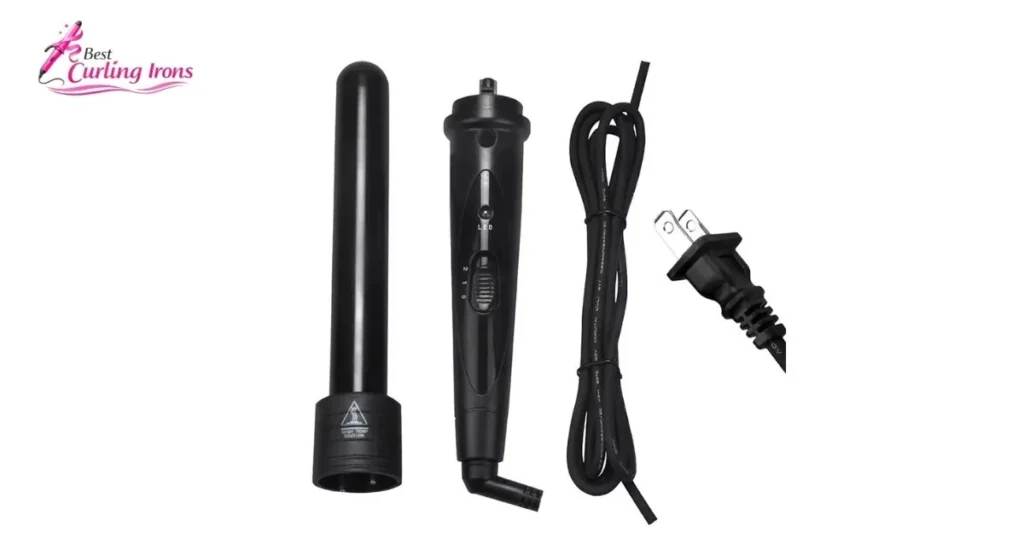
I have observed that most accidents of the curling iron occur in shared or small rooms. During the process of styling, people engage in multitasking, which raises the level of distraction. Even in small areas, a minor slip will result in harm. To prevent the risk, it is better to understand the ways when it grows. Consciousness results in clever position and transit. Special attention is needed because of space constraints.
Choosing a Safe Styling Area
The first step is to find the least risky place to curl hair. It must be a flat and level surface that is not close to water. In small areas, there should be a place allocated to the use of heat tools. This minimizes the movement and confusion. Safety is enhanced by the consistency.
In my case it seems that it is more hazardous to style close to sinks. Heat and water must never be mixed. Workers select their configuration prior to starting up tools. In small spaces, it is a difference to select the least cluttered space. The accentuated styling area avoids accidents. Preparation substitutes spontaneity.
Using Heat-Resistant Surfaces
Small spaces should have heat-resistant surfaces. Directly on counters and furniture should not be placed curling irons. Safe barrier is achieved with heat mats or stands. These hand accessories are miniature yet useful. They prevent melting and burns caused on surfaces.
This is one of the steps that I have found to be skipped by many people because of space constraints. As a matter of fact, heat mats do not occupy much space. They are used even in the hectic conditions by professionals. With heat protection, a person is able to reduce stress during styling. It would enable you to concentrate on technique and not to be concerned about surfaces.
Managing the Power Cord Safely
The cord management is something that is usually ignored yet a big issue in small areas. Long cords may be entangled or caught up on a surface or things or pulled down off counters. This puts fire and burn danger. Cord control is enhanced by organizing the cords. Awareness matters here.
By experience, it is easy to prevent accidental pulling of looping cords by making them loose. Professionals do not leave cords hanging around water and walkways. The placement of the cords in small rooms should be purposeful. Having cord clear cuts off spur of the moment movements. Safety in styling is achievable by using cords that are both controlled.
Keeping Flammable Items Away
Little areas frequently carry a lot of objects in them. Common in the nearby area are towels, tissues, clothing, and paper products. These products must be transferred out prior to action of making the hair. Flammable materials should not be in proximity to heat. Preparation reduces risk.
I have observed that accidents occur when individuals think that the objects are distant. Far enough does not in small spaces suffice. Before switching on the tools professionals ensure their workspace is clear. The flammables should be cleared to provide space. The safety begins with decongestion.
Never Leaving a Curling Iron Unattended
It is easy to leave a curling iron unattended anywhere, but more so in the little areas. When forgotten tools accumulate heat, it develops rapidly. Small rooms enable the heat to impact on the environment more. Accidents occur when there is a distraction.
My experience shows that professionals always de-energize tools after using them. Although it does not take long, a distraction can be harmful. In small areas, cynicism is more important. The presence avoids crises. The largest risk that may be avoided is unattended heat.
Handling Curling Irons Around Water Sources
One of the common styling areas is the bathrooms, and also they are hazardous. The source of water tends to be in proximity of outlets and counters. Curling irons must be stored away long distance of sinks and bathtubs. Dry hands are essential. Humidness enhances electrical hazards.
I have observed that this threat is undermined by many. Electricity around water is very wary of professionals. This involves additional discipline in small bathrooms. The evidence that keeping tools dry is good to protect both the users and the tools. Safety cannot be compromised in terms of water awareness.
Using Built-In Safety Features Wisely
Most curling irons have such safety features as automatic cut-off. Such attributes come in handy in small areas. They minimise risk in the event of the tool being left on accidently. But still, they are not supposed to substitute attentiveness. Safety features are reserves and not routines.
Personally, the use of automatic shut-off completely is a false sense of security. Safety features are viewed as assistance and not license to be reckless by professionals. The knowledge on the functionality enhances confidence. When used correctly, they will provide the added protection. Consciousness is also necessary.
Storing Curling Irons After Use
After styling it is important to be properly stored. The use of curling irons ought to be left to cool before being stored. Hot tools should not be disposed in drawers or bags. Little places tend to promote hurried storage. Patience matters here.
I have witnessed the use of tools that have ruined surfaces due to the fact that they were stored in a hurry. Tools are allowed to cool under open air by professionals. Cooling points of specific sizes are useful in the narrow spaces. Tool life is increased in safe storage. The process of safety is completed by cooling.
Avoiding Crowded Movement While Styling
Small spaces usually assume a collective movement. Individuals pass by or past styling zones. This exposes them to the risk of unplanned exposure to hot tools. Limit movement in the process of styling increases safety.
Personally, I find that professionals will stand so that they are not interrupted. In common places, communication is beneficial. Informing other people about the use of heat tools will avoid accidents. Stillness supports safety. Monitored traffic secures all the people.
Common Safety Mistakes in Small Spaces
Misplacement of a hot curling iron on a soft surface is one of the common errors. Another one is to leave cords that are dangling in narrow places. Rushing increases errors. Taking minor risks, thinking that they are not a big threat, results in a greater issue. These are routines that can be avoided.
I have observed that the majority of errors are by virtue of convenience rather than ignorance. Even in pressure, professionals do not take shortcuts. Being aware of such errors will aid in their prevention. Consciousness transforms action speedily. This will lead to safety when the habits are changed deliberately.
Common Safety Mistakes in Small Spaces
Small space styling is safer with a regular practice. Establishing the same habitually creates habits. The tools are not dropped or thrown about. Risks become less due to familiarity. Routine replaces guesswork.
Personally, I have found that professionals depend on the routine even in a disorganized setting. In the house, comfort streamlines security. Accidents are avoided by small steps that are done repeatedly. Fashioning is more relaxed and tamed. A maintenance schedule contributes to safety in the long term.
FAQs : Curling Iron Safety Tips for Small Spaces
Conclusion
It entails discipline, planning and awareness to use a curling iron safely in small areas. Little space means danger, whilst clever customs make it less substantive. It is important to clear the area, control the cords and wear some heat protection. Safety systems are a help, although they need attention. Small rooms require carefully planned methods of style.
As I have noticed, accidents are mostly avoidable with a few modifications. The use of a secure system turns the tiny spacious areas into manageable style spaces. Curling irons can be applied with lots of confidence even in rooms where space is limited with the right habits. The trick is not to be afraid but prepared. Reasonable habits guard human beings and their possessions.