
How to Curl Hair Without Split Ends : Guide
Learn how to curl hair without split ends using safe heat habits, gentle techniques, proper preparation, and finishing tips that protect hair health.
Split ends constitute one of the most frequent cases of concern among individuals who tend to curl their hair on a regular basis. I have observed a lot of individuals like the appearance of the curls but despise the way their ends are ruined with heat as time goes by. When the hair curls, they may begin to become rough, dry, or uneven though it appeared good initially. This is usually frustrating since it appears that styling would be done at the expense of health of the hair. The fact is that it is not the problem of curling itself. Split ends are typically occasioned by the habits of curling.
The trick to curling hair without split ends lies in changing technique rather than abandoning styling altogether. Even professional stylists maintain healthy ends while using heat daily with a curling iron because they rely on control, planning, and restraint instead of force. When these same habits are practiced at home, damage is greatly reduced. This guide explains how to enjoy curls while protecting the most delicate part of your hair, helping you achieve a polished look that stays healthy over the long term.
Why Split Ends Happen During Curling
Split ends are created as a result of the hair cuticle being broken and shredded. Heat causes the hair shaft to be weakened at the outer layer. This damage is facilitated by frequent stress at the ends. The ends of the hair are old and weaker than the rest. They decompose at a higher temperature.
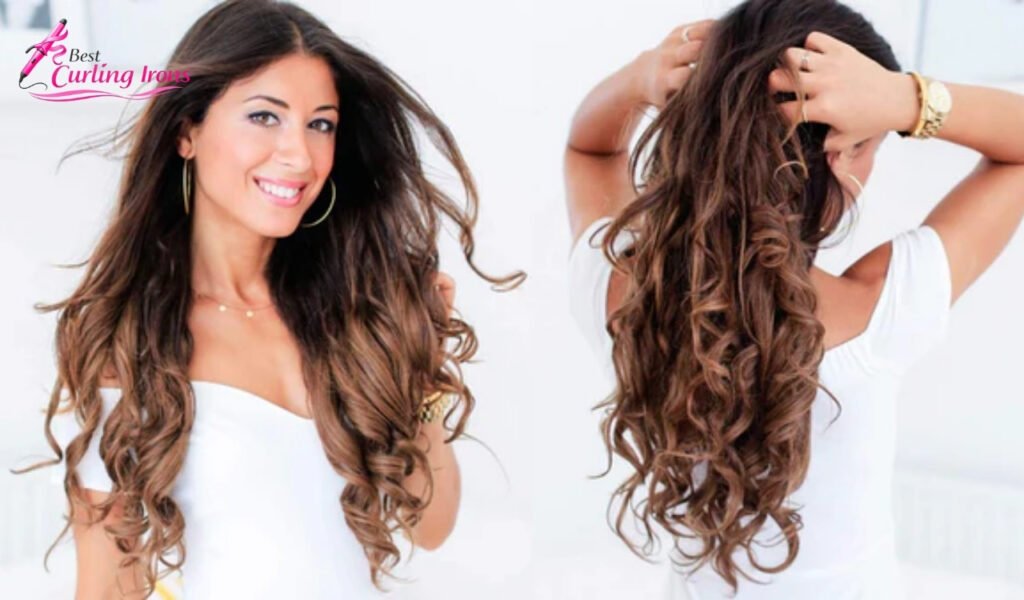
I have also observed that ends are the most affected since they are usually over-curled. To form the curl, people grip the heat longer on the ends. This additional exposure desiccates them. In the long run, the ends become weak. Knowledge of the reasons why it occurs is a way of preventing it. Split ends are not always the result of heat, but rather the habit.
Starting With Healthy Ends
The healthy ends are also more resistant to damages during the styling. Heat will increase the existing dry or split hair. The weakened tips are trimmed regularly before they grow upwards. Trimming does not reduce the growth rather it maintains length quality. The ends of healthy respond to styling.
In my case, curls are better on clean hair. Always professionals evaluate the status of the ends first then they style. Problems are exposed by curling damaged ends. Healthy ends to start with help in stress elimination when heat styling. Preventing is done prior to turning on the curling iron.
Preparing Hair Properly Before Curling
Preparation contributes significantly to split ends prevention. The hair must be completely dry and loosely unwound. Dishevelled hair leads to the exposure to heat in an uneven manner. Seizes when strangled, overheats. Preparations are made smooth.
I have observed that those in a hurry to prepare their hair abuse re-curling. This is a step that professionals will never overlook. Curly hair is more smooth when it is clean and not tangled. This decreases the length of time required to hold the heat on the ends. Good preparation prevents the unnecessary stress of very delicate tips.
Choosing the Right Heat Level
One of the quickest methods of splitting the ends is by using overheat. Ends do not require as much heat as mid lengths. Moisture is easily removed by high temperatures. Ends become brittle once they are dry. Flexibility is retained by the level of heat.
In my case, less heat coupled with effective technique curls hair equally. Maximum heat is never used by professionals, particularly on ends. The moderate temperature does not burn the hair and makes it bend. The curl should not be scalded at the ends. End protection requires heat awareness.
Section Size and End Protection
The huge areas have a tendency to make uneven heat. Inside strands remain straight whereas ends are overheated. This results in repeated transits on the tips. The use of smaller sections enables equal distribution of heat. The ends twist over like other strands.
I have also realised that split ends seem quicker when sectioning is in a hurry. The size of sections used by professionals is controlled. Even heat implies decreased concentration on the ends. Sectioning- well sectioning can minimize the desire to re-curl tips. This vice alone safeguards extremities greatly.
Wrapping Technique Matters
The ends are impacted by the manner in which hair is wrapped around the curling iron. Critical points are made by twisting or clamping ends. These locations become hot and ineffective. Even wrapping enables the heat to evenly flow. Ends must not be turned in, they must be flat.

There is experience in directing the ends, which professionals put on the barrel. They do not pressurize them into position. This eliminates wrinkles and tears. The wrapping must be loose and not tight. Light wrapping will minimise the tip stress. It is more about technique, rather than speed.
Timing and Early Release at the Ends
Another common mistake is to hold on heat excessively. Grows cold the quickest of all the hair. Being too clingy shrinks them up. Ends are also released earlier than mid-lengths by professionals. This protects fragile tips.
I have observed that curls still shape when ends are set out earlier. The curls form automatically when the hair cools. Rarely does overholding enhance shape. The time should be in support of the protection rather than perfection. One of the most easiest methods of avoiding split ends is by releasing it at an early stage.
Letting Curls Cool Without Disturbing the Ends
The process of cooling enables hair bonds to revert to the new form. Pulling or touching of the curls prematurely puts a strain on the ends. This causes fraying in the course of time. When professionals are adjusting the curls, they let them cool down first. The styling process is finished with the help of cooling safely.
In my experience, curls are much healthier and last longer in the case of proper cooling. When cooling is observed, ends do not require additional heat. Patience replaces damage. Another thing that is frequently ignored when securing ends is cooling. It favors fashion and wellness.
Avoiding Repeated Heat on the Same Ends
Split ends are highly caused by repeated passes over the same ends. The moisture is removed with each pass. Hair becomes dry and weak. One clean pass in each section is the goal of professional workers. End curves of re-curling are infrequent.
I have seen that people keep on fixing ends and neglecting the technique concerns. Sectioning or timing is instead modified by professionals. A single deliberate move is preferable to a number of corrections. Repeated heat is avoided and this avoids long term. Efficiency prevents damage.
Finishing Without Drying the Ends
End drying occurs in heavy finishing products. Sprays which contain a lot of alcohol make people brittle. Ends must be supported, not adamant. Professionals complete less and less strategically. Few products at the tip retain softness.
Experience has shown curls to be preferable when ends are loose. Split ends can be seen more clearly due to heavy finishing. Light finishing keeps one on the move and healthy. End protection is offered by restrain during finishing. It is aimed at support and not control.
Daily Habits That Protect Ends
The habitual practices affect the end responsiveness to heat. Tips are damaged by rough brushing, tight elastics and friction. During styling, it is important to handle the hair in a healthy manner. Ends is truly an object of soft treatment when not styled.
I have observed that heat damages are aggravated in cases where they are not taken care of on a daily basis. The end protectors are used by professionals all the time, and not only when styling. Minor rituals lead to strength. There is no care that is occasional rather than end care. The protection does not switch off as soon as the iron is unplugged.
Practicing a Long-Term Curling Routine
Split-endless curling involves uniformity. The routines of the professionals are programmed to cause less harm in the long run. The positive habits are strengthened in each session. Experience creates the understanding of what hair requires. Curls can be achieved safely in the course of time.
In my case, hair is easier to manage when the styling is expected and managed. He gets to be healthier as routine. Good habits can only be repeated to achieve success in the long term. Curling is made more enjoyable and safe. It is possible to have ends that are healthy by choice.
Conclusion
The right habits will allow one to curl hair without split ends. Heat-controlled, light wrapping as well as timing will ensure protection of delicate tips. Sectioning and preparation alleviates recurrent stress. Moisture is maintained in cooler and light finishing. Splits often occur due to recurrent errors and not the curling.
My experience shows that curls which are the healthiest are those which are restrained and aware. Minor alterations bear fruits in the long run. Curls are more attractive and durable when their ends are covered. Through conscious practice, you can have a styled hair and that too without compromising with the health of the hair. Split- end free curling depends on consistency.