How curling irons affect hair elasticity
Learn how curling irons affect hair elasticity, why frequent heat styling weakens flexibility, and how to protect hair from breakage and long-term damage.
I never thought much about hair elasticity until I noticed my curls behaving differently over time. My hair still curled with a best curling iron, but it no longer bounced back the way it used to. The strands felt stiffer, stretched more easily when damp, and sometimes even snapped instead of returning to their natural shape. That was when I began to realize that regular heat styling wasn’t just affecting the surface—it was slowly impacting my hair’s elasticity as well.
One of the most important measurements of hair health is its elasticity, but it can hardly be discussed within the context of daily styling tips. Curling irons do not necessarily destroy elasticity but the course of their use is significant. Getting this relationship will get you to style smart without gradually losing your hair.
What Hair Elasticity Really Means
The elasticity of the hair is the length of the hair to stretch and come back to its original shape without breaking. Healthy hair does stretch easily when pulled and snaps easily. This is the source of hair flexibility that enables it to maintain curls, breakage resistance and natural movement.
At any rate, once the elasticity is lost hair either becomes too stretchy and fails to rebound, or snaps. The hair is made weaker in both instances. Elasticity is very much depending on the moisture balance and structure of the hair.
The Structure of Hair and Why Elasticity Exists
The elasticity of hair is derived in the cortex which is the inner part of the hair strand. This hair layer has a bond of protein and water, which make the hair strong and make it flexible. Hair will be able to deal with both tension and heat better when these bonds are intact.
Outer cuticle covers the cortex, but when the cuticle is broken the moisture is lost as well as exposing the inner cortex. This directly has an influence on the elasticity of hair behavior and feel over a period of time.
How Curling Irons Interact With Hair Bonds
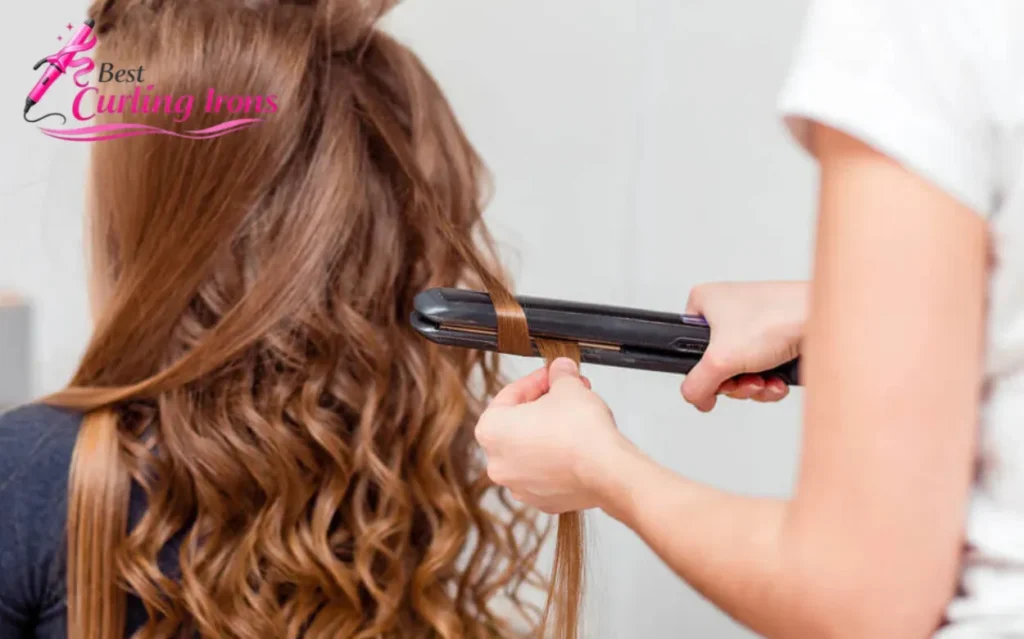
The principle behind the curling irons is the utilization of heat which temporarily disrupts the hydrogen bonds in the hair. These bonds rearrange when the hair cools which enables it to have a new shape. This process per se is not harmful when done on a limited number of occasions and at regulated temperatures.
Excess heat or excessive heat repetition becomes a problem. The tear-and-wear on the internal structure of the hair is made by constant bond disrupting, without sufficient time to heal. With time the elasticity declines since the bonds do not go back to full strength between the styling sessions.
Heat Levels and Their Impact on Elasticity
One of the greatest risks to hair elasticity is the high heat. In hot temperatures the moisture contained within the hair is lost at a high rate leaving the cortex dry and brittle. Dry hair lacks flexibility and its tendency towards snapping increases.
Middle, repressed heat produces much less injury. Hair is more moist within and is also more elastic. The loss of elasticity in my case is a gradual process that would occur once high heat has become a habit.
Frequency Matters More Than Most People Realize
Instances of curling seldom result in elasticity problems. Cumulative stress on the hair is however magnified by daily or close to daily curling. Although every session may be a light one, the cumulative effect is the exposure.
It takes hair time to restore its water and protein level. Elasticity decreases gradually without rest days. This explains why one might have fine hair months and months later it will begin to stretch and break so easily.
Moisture Loss and Elasticity Changes
Wetness has a direct relationship with elasticity. Hair that is well hydrated stretches and bounces back easily and dry hair becomes stiff or is excessively elastic. The moisture can be lowered in curling iron when it is regularly used or used badly.
I have observed that hair with low elasticity is dry even when conditioned. This is due to the fact that loss of internal moisture influences flexibility before surface dryness is apparent.
Signs Curling Irons Are Affecting Elasticity
A typical symptom is hair that is overstretchy when wet, and is unable to regain its normal shape. The other symptom is that hair snaps easily in the process of detangling or styling. Such symptoms usually have an appearance prior to visible split ends.
Curls can also fail to hold as well. Hair that has low elasticity finds it difficult to hold its shape and people are forced to use more heat and this aggravates the situation.
Elasticity vs Breakage: Understanding the Difference
Breakage and elasticity loss are similar to each other though not the same. Lowered elasticity predisposes hair to breakage, however, it is not caused but rather is the consequence. Elasticity is normally influenced by curling irons.
When the elasticity is affected, a little tension may break the strands. This causes irregular lengths and thinning, even in cases that the growth of hair is normal.
Hair Types That Lose Elasticity Faster
Fine hair is more likely to lose elasticity faster due to less number of structural layers. It is heat sensitive and moisture loss is visible earlier. This exposes fine hair to frequent curling.
Hair that is treated by chemicals also becomes less elastic. Weakness of protein bonds through coloring, relaxing, or bleaching increases damage to proteins thus further stress of heat adds to the effect at a faster rate.
Can Elasticity Recover After Heat Damage?
In case of mild damage, hair elasticity can be enhanced in case proper care is instilled early. Frequency of heat, heat downward, and moisture balance-reduction are all involved in stabilization of elasticity.
Nonetheless, badly damaged parts will not heal completely and might have to be trimmed off. Follicles that are healthy and improvement of heat habits will ensure that new hair growth is normal in terms of elasticity.
How to Curl Hair Without Destroying Elasticity
The most crucial factor is the use of the proper amount of heat. The lowest effective temperature of curling maintains moisture and decreases the stress of the bonds. It will also be beneficial to restrict the number of times one passes a single section.
It is important to wait until hair has cooled between curls as well as to space out days of heat styling because it helps to restore hair on a natural level. Such practices are very effective in reducing the rate of elasticity loss with time.
The Role of Hair Care Outside Styling
There is nothing like styles that exist in a vacuum. Elasticity is aided by regular conditioning, easy de-tangling and clipping off the ends that are damaged. Well taken care of hair can withstand some heat.
Scalp health also matters. With proper control of usage of heat, healthy hair regeneration replaces the damaged ones with time and with this, the general elasticity and fullness of hair is restored.
My Experience With Elasticity Changes
Elasticity gradually decreased when I rolled my hair often without considering whether it was hot or cold and whether it had been given a rest. Wet hair was more likely to stretch and dry hair to break. With time, after I have adjusted my routine, the elasticity was improved.
This demonstrated to me that curling irons are not the devil. Poor habits are. Awareness and moderation of hair can make it flexible and strong even during frequent styling.
Common Myths About Curling Irons and Elasticity
The most widespread myth is that all heat can permanently destroy elasticity. As a matter of fact, injury is conditional on the severity, frequency and treatment. The other myth is the loss of elasticity such that hair will not grow back which is not the case.
Learning the mechanism of elasticity will eliminate the unnecessary fear, and will enable the concentration on the actual prevention, rather than the avoidance of styling.
FAQs About Curling Irons and Hair Elasticity
Final Thoughts
The effect of the curling irons on the hair elasticity does not come instantly. It is not about the act of styling but the frequency of application and degree of intensity of heat. Loss of elasticity is caused by lack of time or attention on hair to heal.
Personally, the presence of balanced heat, space in between styling sessions, and hair support are the difference. With a safeguard of elasticity, the curls are more attractive, the hair is also stronger and the styling is much less harmful on long-term basis.