
How to Get Loose Waves Without Volume Loss
Learn how to get loose waves without volume loss using smart sectioning, heat control, curl direction, and finishing techniques for airy, natural movement.
Loose waves are trendy because they look effortless, yet they often start to droop soon after styling with a curling iron. I’ve noticed this even when the waves initially appear perfect. The movement remains in the lengths, but the roots lose their lift and shape, making the style look heavy instead of airy. To fix this, people usually add more heat or product, which only worsens the problem. The real issue isn’t the size of the waves—it’s preserving volume throughout the styling process.
The ability to learn the technique of obtaining loose waves without loss of volume requires the adjustment of just a few major habits. The lift, structure and restraint are emphasized by professional stylists instead of tight curls or heavy finishing. The loose waves must also move freely but the roots should provide support. In the case of a well-balanced technique, hair retains body during the day. This paper lists the process of making loose waves that remain light and full. They are aimed at softness that is permanent, not flat excellence.
Why Loose Waves Often Lose Volume
Loose waves are prone to losing their volume since the hair is not provided with support at the base. The bottom of the hair is flattened in large parts and curled downwards. Everything is then pulled down by gravity. Hair is also weighed down by oils and build up of products. The combination of these factors results in decreased lift.

I have observed that most individuals bend the middle-lengths and the ends. The bases are not touched at all and hence there is no construction to sustain the wave. Experts know that the volume begins at the head. Loose waves destroy without difficulty in the absence of root attention. The identification of this assists in the correction of the issue. Loss of volume normally commences prior to the commencement of curling.
Starting With the Right Hair Condition
The condition of hair is a significant factor in retention of volume. Hair that is over soft or oily will have trouble keeping the shape. Excess conditioner or heavies used prior to styling are a way of making less grip. Hair must not be coated but it must be balanced. Texture supports lift.
It is in practice known that hair is best kept in loose waves when clean and slightly greased. The professionals do not use hefty products during styling days. They are after natural motion, but not slickness. Healthy and sensitive hair retains volume. Airiness of hair is anchored on balance.
Sectioning for Loose Waves With Lift
Sectioning influences volume and shapes of waves. Waves may be produced by very large sections but flatten the roots. Smaller purposeful sections provide a better control. Lift is commonly divided vertically or diagonally by professionals. This enables the hair to have a natural fall.
I have realized that uneven segmentation might be used to really assist in creating natural volume. Symmetry of perfection usually results in flatness. Relaxed sectioning with control permits the separation of waves. The hair is easier to lift when it is strategically positioned. The major volume tool, rather than organization, is sectioning.
Choosing the Right Barrel Size
The size of barrels has direct effects on retention of volume. Extremely large barrels will form bends that disintegrate rapidly. Loose waves with body can be best dealt with by medium- to slightly larger barrels. They do not pull hair down to create movement.
According to my experience, barrel size depends on hair length and density as selected by the professionals. Movement is the aim, and not stretch. An oversized barrel has a tendency of flattening the area of the roots. The appropriate size generates support under the wave. Volume is easier to maintain because of the choice of tools.
Curl Direction and Root Support
Direction of the curl determines the scalp-lifting of hair. Straight down curling promotes flatteness. The slight upward angle that is used to curl Fbaway the face generates lift. It is seldom that professionals curl something without lifting sections first. Direction shapes the base.
The volume has been improved immediately when the direction of the curl is changed. Direction clustering is also avoided by simply switching direction. The flow of hair is more natural at the roots. Direction must not be incidental. Well guided waves are light and full.
Heat Control for Airy Waves
Overheating may cause the waves to become hard and ponderous. The hair becomes unbendable and hair volume reduces rapidly. In order to have soft hair, professionals apply moderate heat. Smooth hair is easier to move and they have more lift. Shape should not be fixed by heat but should just be encouraged.
Loose waves take more time to fade away as the result of experience, when hair is still flexible. Heat is better when low and technique is good than when it is hot. Heat does not enlarge the volume but makes it fall in. Heated atmosphere maintains airiness. Softness is as essential to volume, as is shape.
Timing and Gentle Release
Timing influences the tightness or the looseness of the waves. Keeping hair too long will give it curls that will require brushing. This often removes volume. When the wave is formed, professionals release the hair. Timing is gentle, which conserves natural shape.
I have observed that shorter timing generates waves, which roll into place rather than lying flat. Hair doesn’t feel set or stiff. Professionals observe the hair and not the clock. Mellowing out cushions volume. Time holds waves tender and light in nature.
Letting Waves Cool With Lift
Retention of volume requires cooling. The hair must dry in an upright posture. When the hair is dropped, the waves become flat. When cooling, professionals tend to keep or cut pieces in the brief period. This establishes lift in the absence of additional product.
In my case, the most significant difference in the longevity of volumes is in cooling. The hair recollects its place of cooling. Premature touching of waves destroys structure. Fruience here is used instead of heavy styling at the later. The process of cooling is a natural process to complete the volume.
Breaking Up Waves Without Flattening
The manner in which waves are disaggregated is very important. Vicious brushing Lifts away. Fingers are used lightly or wide-tooth tools by professionals. It is not smooth but separate. The light exercise maintains bulk.
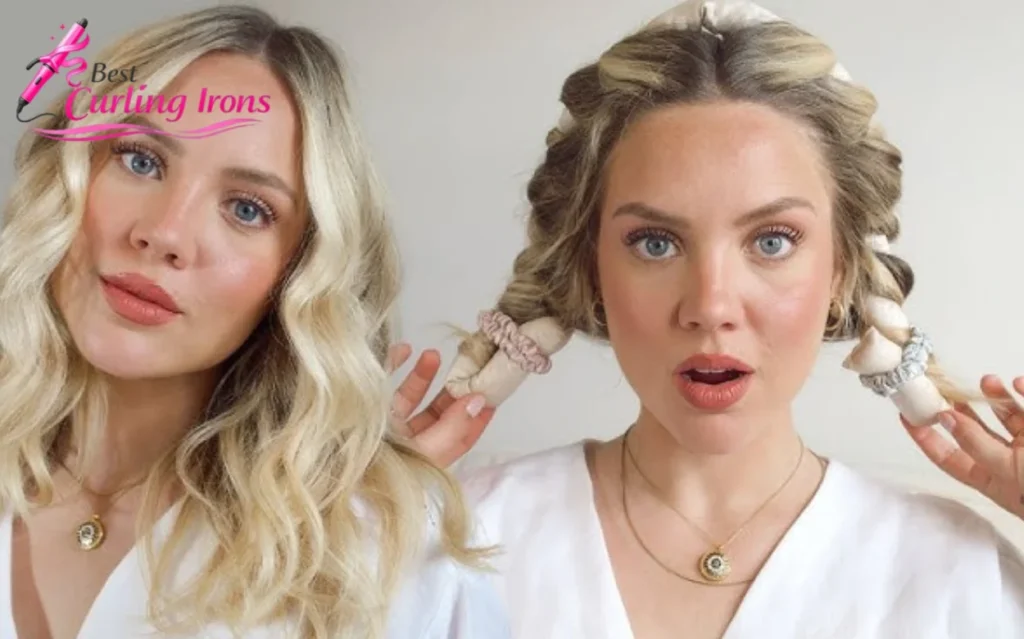
I have observed that pulling up hair even when breaking waves is useful. Using lengths in the middle of the work instead of at the end allows it not to be flattened. The professionals do not work the base too hard. It should be the waves that break and not the structure that it breaks. The step determines the ultimate appearance.
Finishing Products and Volume Balance
Volume can be supported or destroyed by the finishing products. Waves are held down by heavy creams and oils. Professionals involve less product, ends where necessary. Roots are normally left without products. Less is more here.
Experience teaches that it is best to go back before using product in order to avoid excesses. Quite a good portion of waves are self-settling. Light finishing does not make it airless. Not in control of texture but product should improve it. Volume is prolonged with a limited finishing.
Common Mistakes That Kill Volume
Another error is the over-brushing of loose waves. The other one is falling downward unlifted. Excessive use of the product is also a significant problem. The habits straighten hair in a short time. Consciousness helps avoid such fallacies.
I have observed that people tend to pursue slackness by brushing more hair. This usually backfires. Technique is utilized by professionals rather than correction. These errors are to be avoided to maintain volume. Minor adjustments bring about visible enhancement.
Practicing for Consistent Results
Volume waves that are loose are perfected by repetition. Lift and timing are developed by professionals. The creation of awareness is constructed with every styling session. Minimal changes become natural. Practice builds control.
In my experience, root support is all that matters. The waves with time grow predictable and complete. Styling is less difficult and less time-consuming. Confidence comes as a result of consistency. Technique gets habitual through practice.
FAQs About How to Get Loose Waves Without Volume Loss
Conclusion
It is a matter of balance and purpose to get loose waves without loss of volume. Fullness is secured by root lift, sectioning and controlled heat. Soft timings and cooling shape. Complete work should be a little and considerate. Structure is where volume is gained and not through force. Free waves must be light and natural.
It seems to me that the bulk of the volume loss is due to the small habits, rather than hair type. It is visible in adjusting the technique. As practiced, loose waves may remain airy throughout the day. The confidence increases when the outcomes are better. The approach to effortless waves is possible.